
Ashtavakra Samhita (Q&A)
Special Instructions Chapter 16 vv 1-6
Baba’s commentary on Ashtavakra Gita, Chapter 16 vv. 1-6 emphasizes:
(1) “Forget everything” to silence the mind and become pure consciousness; reading/listening alone won’t do it—practice meditation.
(2) Technique: watch between the eyebrows; if you’re thinking, you’re not watching. Many years of meditation without the right technique can lead to sleep or visions.
(3) The mind seeks peace in the Self; even if you make it emperor of the world, it won’t be satisfied.
(4) Practice gently, patiently; avoid rushing.
(5) Prarabdha (body’s destiny) continues; the mind remains free.
(6) Detachment ≠ indifference; compassion is true.
(7) Use breath (long inhale/exhale) to calm restlessness, then return to focus. Practical tips: read 2–3 pages/day, aim for 1 hour of total silence; advanced tapas requires 8–10 hours in one stretch.
Q&As – Ashtavakra Samhita Commentary with Shri Babaji
Register your free place for the live online meditation and Q&A with Babaji: Register
Special Instructions, Chapter 16 vv 1-6, Babaji Q&A, No. 264
Recorded on 9 November 2025 with US participants
Agastya
Chapter 16 is titled “Special Instruction” from Ashtavakra. Ashtavakra speaks: “My dear child, you can recite the various scriptures and listen to teachings again and again, but one cannot become established in the Self unless everything is forgotten.”
Babaji
Here the word “everything forgotten” means the mind should be completely cleared of any idea, any thought, any imagination, any vision, anything—totally silenced. Then it turns to itself. That is what Ashtavakra is trying to tell. Then the mind can establish in its Self. That means you can establish yourself, in your Self. Untill then, you will be wandering with imaginations—away in illusion from your real Self. All the time you are preoccupied with imaginations, so you have to forget that is the word used by Astavakra. It means you have to cleanse everything. Nothing should remain in the mind. It should be totally purified. Pure consciousness is the word we use. To teach or for the sake of understanding, it should become pure consciousness—means it has no more thoughts, no more imagination, no more visions, no color, nothing is there. Just the consciousness of existence will be there. That’s what you get to see. You get to feel. You get to become aware, and in that, you become established in being there. That’s what Ashtavakra talks of here.
Agastya
Yeah, Baba, some people could read that and think you have to erase all your memories, but what you’re doing is stopping all the thoughts.
Babaji
Simply the mind needs to be cleared. Let the brain hold all memories. But if you clear the mind, then the mind will not get applied to the brain unnecessarily, all the time poking into imaginations. It gives up its habits and it becomes silent. That is what is needed.
Agastya
Okay, Baba. I’ll read your comments.
Agastya
“Reading and listening to the teachings of great Masters alone cannot give Self-realization. One must do sadhana to stop the mind and clear it of all imagination, so that it regains pure consciousness. Only then is it possible to abide consciously in the Self. When you start meditating, try not to imagine anything about the ultimate Truth. Otherwise you will visualize the Truth in your own way. Just like trying to measure space, you simply limit it by imagining it.
Babaji
Yeah, that’s what we meant—mentally you have to remain quiet. The simple example you can understand. Reading scriptures—it doesn’t mean that you should not read at all. You can read. We have published so many books like this commentary on the Ashtavakra Gita. You can read it. What I would recommend is to read two to three pages only every day and then sit for meditation. So you can clear the mind. The mind should get cleansed. Otherwise, just by reading, you can (not) establish yourself in your Self. Just by reading the book, you cannot cleanse the mind. Just by listening to my answer, you cannot cleanse the mind. You listen to the answers. You listen to this discussion of question-answers so that you feel inspired, you feel motivated. You understand what you are supposed to do. It is simple you have to give up your thoughts and visions. You have to become quiet mentally for that understanding only, you keep this reading, listening to talks or answers, any such thing. Then you have to get into the job. We are talking about how to bake bread, how to prepare the flour, what ingredients you can put into the bread. Simply that itself will not give you Bread. You listen, you understand what you are supposed to do, then you yourelf have to bake the bread. Only then will you have the bread. It is as simple as that.
Agastya
Thank you, Baba.
Verse two: “As one seeking wisdom, you can enjoy or work or meditate, but your mind will still yearn for That which is beyond all objects and goals, all desires ended.”
So Baba, here you’re talking about the goal of all thoughts and actions is beyond enjoyment or work or even meditation, for that matter.
Babaji
What is in my comment?
Agastya
“The Master warns the disciple that acquired habits of the mind can be troublesome even after long meditation. One must adopt the right technique and continue sadhana until all acquired habits of the mind—which have given rise to an attitude and a certain pattern of thinking—get totally erased once and for all. Until then, sadhana must continue to establish oneself consciously in the Self. By habits only, consciousness goes out of control, and by habit only, it can be brought under control. That’s the practice of sadhana.”
Babaji
Here, you have to understand the technique of meditation is very important. Repeatedly, we keep telling—”to watch in the between eyebrows”. Just watch. This you need to understand. When you are just watching, you are not thinking. If you are thinking, you are not watching 100%. Your mind is preoccupied with spinning and thinking, so it is unable to watch. If you are watching 100% you achieve that one, then the mind stops thinking. That is the technique. This technique you have to understand, it is what all teachers will tell. We are also telling the same thing. Understand the technique, then you can do it very easily. During our guru’s time, many people meditated for years. We have seen people who have sat for hours, a few hours, four hours, six hours, but they never could achieve silence of the mind. Probably they did not adopt the right technique. They would have gone to sleep, or they would have simply ended up getting involved with their thoughts or visions. Any such thing would have prevented them from silencing the mind. So that is important, otherwise, simply year after year, years may pass by and you won’t achieve any silence. So you won’t achieve awareness of the Self. You won’t be able to get established in the Self, and you won’t get Self Realization—no Enlightenment. It is important to understand the technique.
Agastya
So, Baba, what happens to those people who sit for a long time, meditate for a long time, but they don’t obtain? Do they get involved in their own mental world? Maybe the mental world becomes very charming and they are just watching that mental world and not coming back to watching between the eyebrows.
Babaji
Yeah, you see, you prepare the flour for the bread, you shape it and everything and put it in the oven. Then you forget to switch on the electricity. You wait for one hour, you wait for 10 hours, you wait for 10 days or 10 years—the bread will not get baked. In the same way, that’s what happens. The technique is not adopted. Thoughts coming, thoughts going, visions coming, you get involved into the visions. You become a chatterbox, and things simply go on. Many people misunderstand, that getting visions is the experience—that can serve and help you to remain focused. If you are fond of one particular vision, and if that vision is appealing, like a divine vision, then you use it for focusing your mind. The power is in the mind. Mind has to become quiet, only then will it go to its Self, the ultimate Truth, the Para Brahman. Otherwise, the mind will be moving, one thought and another thought, thought after thought, thought after thought, vision after vision, getting excited, “Oh, I had this experience”. Lots of these experiences were given but enlightenment did not happen. I was given the experience. How to prepare the floor. All the ingredients I can put. I could put walnuts, I could put cashews, I could put almonds, everything—but I did not switch on the electricity.
Agastya
So Baba, plugging the oven in to the power source is bringing the attention back to focusing when the mind goes off onto thoughts?
Babaji
Yeah, just remain focused—watch, but don’t do anything else. Don’t think. Watch, but don’t think. Focus, but don’t think about it, so that the mind can become silent. It is essential. Only then it will go to the Self. See, I have repeatedly told how infinite the mind itself is. Minus the thoughts and visions, the mind itself you are unable to see with the naked eye. You cannot catch hold and show it to somebody, “This is my mind, this is the color of my mind, nothing. You cannot even explain, you become dumbfounded when you see that one. At least thoughts and visions you can explain—my mind is undergoing this, these thoughts are coming, these visions are happening to me. You can explain something, but the mind itself, what can you explain? The mind is there, but everybody recognizes the mind by thoughts and visions—that is not the mind. These thoughts and visions are in the mind. It is not the mind itself. Mind itself cannot become one thought. It can hold 100,000 thoughts, any amount of thoughts, that is no problem. It has all come out from the mind only. Mind is the raw material, but mind is not visible. That means the mind has not been silenced, and mind is not established in the Self. Self Realization has not occurred at all.
Agastya
Baba, back to the oven analogy. It seems like somebody’s unplugging the oven constantly. You start meditating, you focus, and then shortly you’re off on thoughts. Somebody has unplugged the oven and you have to plug it back in—go back to watching. Then you’re off in thought, back to watching, off in thought back to watching.
Babaji
Yeah, you try to do that one. You keep the plug in the socket, and still you don’t know you have to switch on the electricity. You haven’t understood the point, that the master is teaching. Electricity is important. Just watch is important. You are able to close the eyes. You are able to sit in any comfortable posture. You can keep your back and neck straight. You can close your eyes, but then, “just watch”. That is important.
Agastya
Baba, in this verse, I’ll read it again: “As one seeking wisdom, you can enjoy, work, or meditate, but your mind will still yearn for that which is beyond all objects and goals.” It seems to be saying that no matter what you learn or achieve or acquire, the mind will never be satisfied, because what it’s looking for is beyond all that.
Babaji
That’s what I keep telling. The mind is looking for the same peace that it had enjoyed by remaining in the Self. That is why it doesn’t stop with any object matter, anything you give it. You make it the emperor of the world. You give it galaxies, you give it the Milky Way, you make the mind Emperor of all these things—it will never be satisfied. It will look for something else. It doesn’t stop. But the moment mind can go to its Self, then the search ends, because contentment happens. No more desires come, there is no need of anything else. That’s why no desires come at all. That is the important thing being told here. You can apply wisdom. You can become intelligent. You might be a genius. You may invent, you might make discoveries useful in this world. One trying to become powerful, more than the other. One country trying to become powerful. A genius scientist will work and bring new things for society. But can peace be manufactured?
Babaji
Once I was talking to scientists, and jokingly I told them, I hope you will invent some machine which can manufacture peace and give peace to humanity. You can give anything. You are creating one thing after another, one after another—amazing. After 70 years of age we have seen so much. When we were 20 years old, whatever was not, whatever was a miracle, whatever was a dream, today, it is a reality. I am sitting here, in Dehradun, India, on the dais of my Dhyana Mandir and all of you are in different parts of the world. Most of you are in America. You are able to see me live, talking to you while you are sitting in your drawing rooms comfortably. You don’t have to travel all the way to come here. That is the miracle we have seen. But this cannot give peace. Peace comes only when you become quiet mentally. That’s what Ashtavakra is trying to tell you. Ashtavakra is endorsing what I have been telling you all.
Agastya
How can you become quiet mentally all the time and be active in the world, accomplishing your responsibilities?
Babaji
One thing even if you need to think a little bit, you don’t have to become anxious, and all the time end up thinking, thinking, thinking. Just think to plan and then get into the job. Focus on to the job. This will be possible when you practice meditation. Then the mind will not absorb any imprints. It will not absorb any attitude. All the time it will not be thinking that it is a scientist. A Self Realized soul, like us, all the time my mind will not be thinking, I am a realized soul. I don’t remember that at all. It doesn’t come to the mind. When you address, “Oh, Baba, you are Self Realized”, then it comes. Oh, okay. You are thinking that I am Self Realized. It’s okay. Okay, I’m Self Realized. More than that, nothing is interesting for me. I’m just quiet. So that’s how it is possible when you practice meditation to be active in the world. Minimum that is required, you will be active. You won’t gossip unnecessarily, whenever it is required, then you talk. Other than that, you won’t gossip. People are used to gossiping. The moment you stop meditation at the retreats, people start talking. They have to end up talking. It’s such a priority, an important thing, they have to talk. They go to the dining hall—they have to talk. They go on to the lawn—they have to talk. They come to the meditation hall—they have to talk. Like this, that habit, habitual things. To stop that, you have to practice this. If you practice this, when you are active in the world, you don’t have to be talking all the time of what you have to do. I have to conduct a retreat. Everybody is working. When people come, they sit in front of me, then I will start talking. Till then, I don’t have to be thinking all the time. about what I will say. Since morning, I sent the link for today’s Zoom to all the people on my community list. That’s it. Afterwards, I didn’t think anything at all. I didn’t have to be thinking, “Oh, today I have Zoom. Don’t know what questions Agastya will ask. Should I be prepared? Should I read something? Will the question be from this?” Never needed anything. I kept quiet, at peace. Now he is asking, and it’s (the answers are) coming spontaneously. Like that, it will be possible for you also. You can live, you can think and work, and then you will become quiet. You won’t be nervous, you won’t be anxious, you won’t be stressed out. You will be at peace.
Agastya
So, Baba, that’s the nature of a Self Realized person, they can be engaged in thinking and activity, but at the same time, they’re always aware they are the absolute.
Babaji
Yeah, the awareness is always there, and they won’t allow the mind to go further into thinking, thinking, thinking. Thought after thought, thought after thought will not happen at all. It becomes quiet. The job is done. Composed.
Agastya
Verse three:
“Everyone is unhappy because they’re striving to fulfill desires—but no one understands this. Only through the teaching given here does the blessed one attain Liberation.
Comment: “While trying to do sadhana, often, seekers are likely to be in a rush and force it upon themselves, so after some time, they’re likely to become tired and give up sadhana. All that’s required is to practice to remain quiet. The mind has lost its natural state of remaining quiet and consciously in the Self by getting into its own endless imaginations. All that is required is gently, politely, peacefully, in a relaxed way, just practice to remain quiet. More force and an unnecessary rush gives unhappiness and frustration.”
Babaji
Very often when people see a Master, everybody prostrating, or everybody becoming a student, that might appear a little bit glamorous for some people. Then they start thinking, “Oh, if I can also become Self Realized by tomorrow, then tomorrow evening I can be sitting on the dais and everybody will be my student.” That type of thing makes a person to rush. When can I have the enlightenment? How long do I have to do? “Oh, my God, tapas, if I have to do such long years” and they get frustrated, they want it tomorrow. It will come, it’s not a big problem. You just practice today, take one step, tomorrow next step and one day you will be on top of the mountain. You don’t have to be anxious for that. Keep doing. We were never anxious at the young age. We were serving and never had the imagination that in this body I had to become a guru or that I will sit on a dais. These ideas never came. We just used to dust and serve the master and look after everything. Sometimes jokingly, I would think no problem, I will always consider my incarnation has happened to dust the floors of my guru’s ashram. That’s it, for this purpose only I have come. Once I am finished dusting, the purpose will be done. Then I will go away from the world one day. It’s a different thing today, I’ve become a guru and am sitting with you all. So that is how you don’t have to be in a rush or thinking, just go on quieting the mind. Practice that. That enables you one day to be ready, ready to answer all the questions, ready to teach in the right way, ready to give the right technique. You become eligible, and people will call you enlightened. You are talking the truth. More authentic. You are so transparent. All these things automatically come. You don’t have to claim anything at all. Even if somebody asked a question to me, luckily, other questions are asked and it’s easy to answer. Suppose suddenly Agastya asked, “Baba, are you really enlightened?” That will be a puzzle for me, difficult to answer. I won’t be able to answer. What to answer to this? Any other question can be easily answered—about mind, about quietening, everything can be answered. That doesn’t come to me as an imagination, that I am enlightened at all. I am a chairman. I am a guru. Nothing comes to the mind. Just like anybody else, I keep moving, going around. Somebody has to remind me, at least today, you wear a silk shawl, you are going to a function, and everybody will be sitting there. So then, okay, okay, I will do that one, and then I sit. So it’s something like that.
Agastya 4
Baba, you say, there’s nothing coming to the mind, but you’re talking to us. You answer our questions. Isn’t there something in the mind?
Babaji
This is not from the mind, and this is not from me. Not a planned one. There is no such habit in the mind that I have to talk like this. Suddenly it came. I should tell this much, spontaneous world, and from where it came, I don’t know. When the mind is silent, how can it come from the mind? Mind is not imagining anything at all.
Agastya
I used to jokingly call you the Oracle, because when you are asked a question and the answer comes out.
Babaji
Like the automatic activity. You insert the debit card, and the money comes.
Agastya
So Baba, everything today, all these answers are just coming out spontaneously? They’re not coming from your mind?
Babaji
Definitely, I did not prepare. After writing the commentary of Ashtavakra Gita, I have not read it a second time to see what I have written. So when you read my comments, then only I will remember, “Oh, these are the comments”. Then I can elaborately talk about it. Something else can be told.
Agastya
So Baba, it’s important to quiet our mind, and meditation is the primary tool for that, but is there anything we can do during the day, during our waking state, to help us quiet our mind or keep it quiet?
Babaji
See, the mind remains quiet and recedes if you simply accept the results as they happen. The whole day you put in effort and whatever is happening, simply keep quiet, accept it. These are the divine wishes. Maybe the Divine has better things in store, then your mind becomes quiet. Just like the boss has asked me, and I am just doing my job, that’s it, the mind becomes quiet. So like that, if you think of the divine as the boss, and he’s asking you to take the slap or he’s asking you to slap, either of the two, you are just at peace. I’m just doing my job, that’s all.
Agastya
That’s the same as practicing to stay in the moment, because in the moment, it’s always peaceful.
Babaji
Exactly, exactly, that’s what it is. Okay.
Agastya
Verse 4. “Nobody, but that One who rests unmoving to such a degree that even the effort of opening and closing of their eyelids is a burden, enjoys true happiness.”
Your comments: “The master recommends to remain mentally detached in every way. For a Self-realized soul, even the minimum required activity shall appear as bondage. They will wait for the body to drop, when consciously, once and for all, they can remain in the Self. Self Realized Souls indulge in the very minimum of activities while alive through the physical body, known as the Jivanmukta state. Often, seekers can misunderstand mental detachment as physical detachment. Though a yogi remains in the Self at all times, when it comes to helping others, a yogi will show compassion, yet they will not get involved mentally into the world.
Babaji
That’s why, carefully I have written this. We become compassionate. Many people come with prayers, some difficulties they want to convey, and we definitely do pray for them. Pray to the Divine, to the ultimate Truth, to the guru, Divine Guru, to assure them that we are compassionate. We are not inert or rude or ignoring or not caring. No such thing. Though I would appear as inert, there is nothing in the mind. Unless you ask, I don’t have anything to say. Everything, this body is a burden, so I don’t feel like going for a walk; don’t feel like running here and there. I having been sitting for a long time. I can sit, but now I’m being pulled up that I should not be sitting. The legs are troublesome. You should get up. The doctor gives a long lecture. Somebody gives a long lecture, and they try. For this reason I just get up and go for a few steps and come back. Otherwise, I can be sitting, sitting quietly like this, because nothing else is there. Open the eyes, talking, they keep discussing any such things. Sometimes I show some irritation, because that’s a burden to think, talk, tell, discuss and execute things. So you do whatever you want to do. You do it. That’s it.
Agastya
Baba, we need you here in your body, so you need to take care of it.
Babaji
That’s why I didn’t touch that point at all. Everybody will be bewildered. Oh no, no, no, no, Baba, you should not talk like that. Sometimes when I tell jokingly, see I am going to be tough with you all. I will talk the right, frank answer. Pull you up, because the last chapter of my life is going on. I’m not going to be soft anymore. No smiling anymore, and they get frightened and bewildered. No, no, this is very bad. You pull us up, you scold us, but don’t tell us this is the last chapter. This cannot be. We need you. Okay, funny things.
Agastya
So, Baba, there’s a big difference between detachment and indifference.
Babaji
Yeah, definitely. Often people can misunderstand, thinking you are indifferent to this world. That’s why we had to tell that, if necessary, we become compassionate. If anybody is suffering, they come and pray. Often they come because they are stressed out in life. Today, in the evening somebody had come from Thailand and was discussing, so much stress in their lives, so much of pain, and they feel that they are lost. I was counseling; I promised I will pray for them and was affectionate. I tell them, consider I am just like a father for you. I am always here to listen, anytime you have any problem. No problem, you can convey everything to me, I will listen. I will give time. You will feel relieved, at least somebody has listened to your problem and understands. Like that, we keep doing this.
Agastya
Baba, would it be true to say that true detachment requires true compassion?
Babaji
Mentally, we won’t get involved. Just like a doctor going around in the OPD, attending all patients and checking everything, and giving prescriptions. And then he calls next, and the next patient will come. Then he checks everything, gives whatever prescription. He tells you to do like this, you do like this and then sends for the next patient. He cannot afford to become a patient. If he becomes attached, the doctor will become a patient. So like that jokingly, I tell Ambaji, I have to go for my OPD—Outpatient Department. I have to attend devotees who are sitting there, so I need to go to my OPD. Like that I tell she laughs.
Agastya
Baba, true compassion requires being detached.
Babaji
Yeah, you have to be detached. That is the true compassion. If you become attached, you will also become a casualty.
Agastya
Okay, thank you.
Verse 5. “When the mind is freed from the pairs of opposites, such as, this is to be done or this is not to be done, it becomes indifferent to the worldly goals of righteous work, prosperity, pleasures and even liberation.”
Your comments: “One who has achieved Self-realization does not get involved in analyzations and judgments, whether to do or not do anything. Doing anything, such a One would not be getting involved in any way. A Yogi is always free from all karmas as there will be no imagination of doership, and there will not be any desire to achieve anything else, because they are abiding in the Self—after which there is no need for anything else. Whether anybody praises or criticizes, a Yogi remains unaffected.”
Baba, I have a note here, just a footnote. If doing anything, one will not get involved in any way. If you’re not involved in any way, then who’s doing it?
Babaji
Say, by a mechanical process. Say, if we are holding some responsible position, we have to do a little bit of hissing noise sometimes, to tell don’t take take me for granted, like that, but instantly we forget. It is like you write on a white paper and it gets erased immediately. Nothing stays in the mind. At that time, I might pull up somebody, I might show a little irritation or anger, just to make them understand “don’t take me for granted.” That is all and then we forget. At that time, if I don’t do it (I will forget it). I have seen my guru Swamiji he used to keep repeating ten times again and again, so that he wouldn’t forget, that he needed to tell something to somebody when they come. I used to say, otherwise, once he kept quiet, then it would drop out of his mind. He would have forgotten. Many times he would scold us terribly and ask us to get out and don’t show your face to me. I used to come out of his room and just for one or two minutes go down and come back, take a sip of water, go back and stand in front of him—he would have forgotten, and he would give some sweets. Sometimes he would be as if telling a joke, and he would laugh at us and everything. He would be laughing, as if nothing at all had happened two minutes before. Two minutes before, he would have asked me not to show my face. Two minutes later, I am in front of him, and he would have forgotten.
Agastya
Baba, it says here a Yogi is always free from all karmas. What does that mean? What are karmas?
Babaji
Mind does not suffer, is the meaning actually. The body will go according to the prārabdha. The body has been born, that is has come into existence in the world itself isa prārabdha. Otherwise, it wouldn’t have come at all. If the total liberation (had occurred the mind would have) merged with the Self, then this body wouldn’t have come at all. So that is the thing the body will undergo. It will undergo any illness also and anything connected to, if anything connected to this world has happened. Say, if you are sitting under a tree, the body would have been in trouble. And if you have an ashram, the ashram can be in trouble. Somebody trying to take away your ashram, they want to usurp the land. That can be trouble again. So these prarabdhas keep happening. It’s always happening, but the mind doesn’t take anything. It doesn’t absorb. It is in the Self. It is totally aware of the Self. Nothing is happening. It’s just like a cinema is happening on the screen. It will be alright. They are all actors. They will go back safely to their homes. Don’t worry. Everything is alright.
Baba
So Baba, what does prārabdha mean?
Babaji
Prārabdhas are the things that go on happening in your life, connected to the physical body. That is generally recognized as destiny. You are destined to undergo—that was in your prārabdha. The Prārabdha word has been used for destiny. So that’s what it is. Suppose you develop some illness in the body. Oh, that was the destiny. It was in your prarabdha. That’s why this body had to undergo all these things. If somebody is troubling you, wants to prick you, that is prarabdha. Somebody is trying to take away the ashram you are looking after and that is the prarabdha. Like this, the prarabdha, everything is prarabdha. It keeps happening according to the prarabdha, Nobody has come to be a sannyas in the ashram and to look after the ashram and after us, is our prarabdha.
Agastya
Baba, it also says there will not be any imagination of doership, and there shall not be any desire to achieve anything. Now this is something that used to frighten people, because they thought if they did meditation, or practice a spiritual life, they will become indifferent to the world.
Babaji
That’s why I have tried to reassure people not to worry like that. A little bit of consciousness will be in touch with the brain, if at all one becomes Self Realized they can be normal. They can love their beloved ones. They can go around the world, they can keep doing, simply their mind will not absorb any imprints. A Yogi by doing tapas would have stopped the future there is no future prārabdha there. But whatever had been resolved for this body, as long as this body is alive, that prārabdha will go on according to that. So that is how things will happen. Nothing to worry, it will be all right. People don’t have to worry. You can be a normal person. First try to bother about Self-realization, and then you will see you can be a normal person. But Swamiji would have scolded, ”first try to meditate for one hour. Why are you so bothered about Self-realization? Who is going to become Self Realized? Idiot, you achieve one hour of peace at least.” Like that he would scold simply. Then everything will be all right, you don’t have to worry about that one.
Agastya
Baba, it says that abiding in the Self, after you have achieved that, there’s no need for anything.
Babaji
Mentally, there is no craving, there is no desire. Only if anything is needed to sustain the body, you give food mechanically, but mind doesn’t crave for any particular food or any such things. It doesn’t have any such desires. This craving, as Buddha said, constant craving of the mind is the basic reason for unhappiness. That craving has disappeared, it will not be there. You get it and you eat it; you don’t get it, you don’t eat it.
Agastya
So the body, the mind, just responds to what is necessary at the moment without any additional craving.
Babaji
Yes. A cold might come, and hunger might happen. All Self-realized souls have taken food. Even the ancient sages used to take food to sustain the body, mechanically. Minimum required, not that we will go on fulfilling every urge of the body. That is nonsense, no need, just minimum to sustain the body. Food, water, some oxygen, these basic needs.
Agastya
Baba, would any Self-realized person want their body to live indefinitely? You read about some yogis that lived for a very long time.
Babaji
Such ideas don’t come. The body idea itself doesn’t come to the mind. How long do you have to keep it? One day it has to go. Nachiketa, if you live 5,000 years, then after that, you have to go. That time will simply pass by. For a yogi, time passes by very quickly, because mind is at peace. It is not into any craving, so there is no such trouble of mind. Time passes by very quickly. Last year, 2024, suddenly it is 2025, how did it happen? This passing by is difficult to understand for a yogi. It simply has happened. Lke that every day keeps going, keeps going. Such an imagination doesn’t occur, that I need to keep this body. Anytime this has to go, this will go, that’s it.
Agastya
Baba, when doing your tapas, was time like that? It just went by very fast.
Babaji
Yeah, we never noticed the time, it simply passed by, like two minutes for five years.
Agastya
Yeah, well, sometimes when you’re trying to meditate, two minutes seems like five years.
Babaji
Yeah, at times I used to think, oh God, if only I can be sitting like this. So if meditation doesn’t happen, it sounds like five years, “Oh God, still five years to go”, it appears like such a long distance. Afterwards, so many five years have passed by after tapas. Twenty-five years, how it passed by? We are simply going around, going around, talking to people, teaching and simply time is passing by like this. So quickly it’s over.
Agastya
One last question, Baba, and then we’ll take some questions.
Babaji
Yeah, and we can give to others a little bit of a chance.
Agastya
Verse 6. “One who disdains the objects of the world becomes unattached. One who likes them becomes attached, but that one who neither likes nor dislikes is neither attached nor unattached. Would you explain that?
Babaji
Yeah, that’s a Yogi. Means, otherwise for an ordinary person, he needs to be detached. He is always scared about the worldly objects. “Oh, that should not attract me. I should not be thinking like that. That should not come in front of me. Oh, God, if it happens, what will I do?” All these things. For a yogi there is no such thing. Naturally, he is just quiet. He is neither attracted nor detached. He has risen above the dualities. Nothing is there. If a certain thing is here, it is there. An ashram came into existence, it has come. When it was not there, there was no craving that we needed a separate ashram for me. So like that, if somebody comes and the trustees ask me to get out of this Ashram, we will simply get out peacefully. There is no craving that we need to be sticking to this property, that type of thing. The mind is at peace always. So for a yogi, he doesn’t get involved in either of the dualities. If it comes, it comes. If it doesn’t come, it doesn’t come. If some disciples come, they serve me, it’s okay. If they don’t come, and if they don’t serve, it’s fine.
Agastya
Okay, Baba. Thank you very much. So, would you like to take some questions from people?
Babaji
Okay, okay, about 15 or 20 minutes I can take.
Victoria
Baba, I have a question. Yes. This question is about prārabdha and acquired habits, and trying to understand something that I keep facing in meditation and why it keeps happening. I understand the watching and silence and keep going back to watching, but I always find that the body will move during meditation, and the eyes will open. I’ll get into this place of silence and stillness, and then I come out of it. This is in addition to thoughts, The eyes will open, like I’m deep in the ocean, and then there’s the stirring and the eyes open. And I don’t know if that’s just a habit or if it’s prarabdha, it’s just my nature. I want to know what I can do to dissolve this habit.
Babaji
Habits only knit prārabdha. Due to habits a prārabdha gets knitted; it comes into shape. That means whatever thoughts come into your mind repeatedly, depending on the potency, (which increases thru repetition), a future gets built up for you. That is what the prārabdha is. So the less coming into your mind, the less prārabdha will happen, that is what is important. Acquired habits are so important. Mentally, not visualizing as much as possible. Like if you visualize only Self-realization, becoming Self-realized will become your prārabdha, that’s how you will be shaped. So we try to teach, if at all there has to be thoughts, try to have positive thoughts so that you can shape a positive destiny for yourself. Think about the Atman. Think about the ultimate Truth. Think that you need Self-realization. If you keep thinking, that will induce you into putting in efforts also, and that is when the prārabdha gets shaped. That is how habits of the mind shape the prārabdha.
Victoria
So the movement that happens while sitting in meditation, I have to move my leg because my hip is hurting. I’ll just move. There’s movement. I’ll open my eyes. is that just a habit. I have a lack of discipline.
Babaji
Yes, that habit needs to be changed, and one can change it if they want. If you want, you can change it. You need to exercise some strong willpower. Always to deal with a certain negative thing, you need an antidote that is stronger than that negative thing. This habit is there as a strong thing, so you need stronger willpower to get rid of the habit. That is the antidote, that’s what you have to do to overcome this habit. Then any prarabdha will not get shaped at all.
Babaji
Kriti, come in please.
Kriti
Pranams, Babaji. Babaji, in connection to the same question Victoria asked. When observing the mind, the moment Babaji says, just watch or focus on silence of the mind, it seems that the mind is in the habit of identifying with imaginations. If there is no imagination in the mind, silence doesn’t stay in that mode. It tries to keep getting some imagination or find something, as if that’s its existence. Why does the mind have this misconception or misunderstanding?
Babaji
That is the habit. So for that reason, a student, a seeker, is advised to take the help of the eyeballs, by closing the eyes. We always tell, concentrate your mind and sight. Mind you understand—sight means fix the eyeballs there (between the eyes), then you get into the job of just watching. When you are watching, mind will not go on imagining what you have to do, what you don’t have to do. Simply you are doing what you have to do—you are watching. So you won’t be thinking, “Oh, I have to watch, I have to watch”. That itself will not make you watch. Instead, you get into the job of just watching. One thought you can take the help of, if necessary—”Oh, I need to just watch”. Don’t bother about all these thoughts. These things have no significance. These are all illusions, my own imaginations. That much you think and then get into the job of watching again. Thus, slowly you have the upper hand. This will become an antidote and with your will power you can get rid of those imaginations.
Kriti
Babaji, there is also another observation when I try to see how my mind is reacting. If there is an idea of peace or losing all desires, the mind starts giving attitude, depression, that there is no life without desire. Why does it go into depression like this?
Babaji
Because not to have any desires is also born out of an imagination. When you imagine not having any desires, all those desires will be belonging to this world. Then, you are likely to start missing those things about which you don’t want to have desires, that gives a depression. So actual peace has not yet descended. Once you just watch instead of thinking, I don’t have to have any desires. That is not it. On its own if desire is coming, let it come for a while, you just watch. Let it come. You just watch, then it will go away. Then when peace is there, there will not be any depression, because you are not going to miss anything. You are at peace already. Peace gives happiness and enjoyment. So for sake of peace only, you are trying to own everything in the world. You are trying to achieve everything in the world. Once that switch is stopped, then you don’t feel like having anything at all.
Kriti
Okay, Babaji, last thing in this connection. The last thing is the body consciousness and mind. Babaji said, body will have its prarabdha of going through pain or going through something. So for Babaji, is his mind detached from this body’s prarabdha? It doesn’t care about body consciousness and prarabdha at all, and that is the state of being at peace? The body can go through everything but not be involved with it.
Babaji
You see what I can tell now, a pain is felt because a little bit of consciousness is in touch with the brain, otherwise the body gets dropped. So when pain happens in the body, it is felt, but mind doesn’t suffer further. It doesn’t go into such suffering. It can be joking, it can be trying to do something. It will try to overcome the pain by taking medicine. Anything can happen, but mind will not be suffering too much like, like for an ordinary person.
Babaji
Mr. Chen, please come in.
Questioner
Yes, Namaskar, Babaji. I got a lot of good nuggets today from your questions and answers with Agastya. You shared something, like you need to forget your thoughts, disconnect your thoughts, and about prarabdha, destiny, suffering, and the body.
My question is, in order to achieve focusing of your mind and getting into the meditation state, you have to disconnect from your body. You have to disconnect from your thoughts. You have to focus on this (between eyebrows). Is there a technique that we can use to disconnect our body so we don’t feel hungry, we don’t feel pain, we don’t feel anything going on in our body, even if we are suffering and have pain that does not come up. How can we achieve that?
Babaji
Actually, such a thing is not advocated in spirituality, because if you totally withdraw the mind, the body dies. For the brain, along with the oxygen and the blood that gets applied, the mind’s application is also very important. That is also a fuel type. That’s when the brain will be active. It is the mind which has to use the brain. Because of this, the pain will be felt, even for a yogi, that’s what I was trying to tell. You cannot completely detach the mind so that pain should not be felt at all. It cannot happen. Simply the mind will not suffer, but the pain will be felt. If a surgery has to happen, even for a yogi, anesthesia will have to be given. So that is necessary, that’s what the truth is. Otherwise the body will die. So that is not advised at all. You meditate so that you become quiet mentally so that you don’t suffer and you are aware of your real Self.
Questioner
And my second question, Babaji. Right now we have day to day activities that we have to do with our body and our mind. We have to keep quiet. In the computer world, we have a process where we create a process, and that process goes in the background and runs, and then other activities are done by other processes. So if we can have a technique whereby our main mind is focusing on Self Realization and spiritual things, while our body can be doing the physical activity like work or things like that, then we are achieving two things while spending our time. You know, 24 hours, we can keep running our mind focused and our body can do the day to day activities. Is there a technique like that?
Babaji
Yes, definitely, that’s what we have been talking about. This meditation is such a technique which helps you. A majority of the potency of the mind will remain in awareness of the Self, and you will require only a little bit of consciousness of the Self to get applied to the brain to be active in this world. Whichever field you would have obtained expertise in, you can continue working with computers, or any other field will be possible. Still, you will not absorb any imprints. Acquired habits will not come. The mind will not suffer. So that is the achievement you can do. But for this, you need to practice eight to 10 hours of meditation in one stretch, several years of practice like this, which is known as tapas. Then such a status will come. But at least when you achieve one hour of total silence. Now, you need to understand, when you are able to keep the mind quiet totally for one hour, that is the real meditation. My guru used to say, until then you are trying to meditate. When you are able to keep the mind quiet for eight to ten hours in a stretch, then you are able to do the tapas. At least, if you achieve one hour of total silence, also, a lot can be controlled in your day to day life. You will not absorb imprints. Still, you will be able to attend to your necessary duties, whether you are a computer engineer or a policeman or anything. That will be possible. Like King Janaka, he could attend to politics, look after an empire and be an emperor, still he was considered a Self Realized Master.
Questioner
Thank you, Babaji.
Babaji
Next, Susan, please come in.
Susan
Yeah, you know, I find that I’m very positive for everybody else, but not myself, because I feel all the past, not that I want to know it, but I just know they were probably hell, my past lives. So I feel that all the time, and it’s very hard to meditate. So what do I do?
Babaji
You see, you have to meditate. You have to apply some willpower. It’s like the old saying, you can get married only if your madness goes, but Your madness goes, only if you get married—then nothing will happen. So like that, you have to sit for meditation. Then this prarabdha, this karma, this suffering, will all end. Mentally you can achieve peace. Somewhere you have to apply willpower and sit down in whichever way that’s possible. That’s why my guru said, you can sit in any comfortable posture. You can sit on a chair, and you can keep a pillow for your back. Comfortably sit down, gently relax, close the eyes and try to simply remain concentrated, if possible, in between eyebrows, or at least on the front portion. Try to feel yourself. You will get that peace.
Babaji
Ryan, please come in.
Ryan
Yes, pranams Babaji. Thank you so much. I like to contemplate the state of a Yogi. I know you’ve described it before, just as giving clues. I know it’s inconceivable, but is the state sort of like you’re not seeing individuals or differentiating at all. It’s just all one, one thing, one self, and everything is just spontaneously happening, and going on.
Babaji
Definitely, just like if you keep several earthen pots, six or seven, and you are very well aware the same space is in all the earthen pots, and your attention is on that space. You keep wondering about that space which exists in itself, which is simply all pervaded. The earthen pot itself will not be that wondrous for you as that space which is inside. That is how a Yogi’s seeing will be. The Self means the all pervaded, infinite Self. That is the greatest wonder. Though we get to see the body, we are very well aware, because of the brain’s reflections, the same soul, the same consciousness, is behaving in a different way in one body, behaving in a different way in another body. The same has peace here in another body. So that’s when a Yogi becomes compassionate and tries to teach this awareness to each and everyone. May everybody achieve this supreme peace, this happiness in themselves and be active in this world. That’s what we would like to pray for you all. Thank you.
Agastya
Baba, can I ask a question? It goes back to Kriti’s question. It’s a practical question. How much effort should you make to concentrate your mind and sight between the eyebrows? Sometimes the mind is very busy, and the attention won’t stay on the mind more than or won’t stay there for more than 10 seconds. Stay focused more than 10 seconds. So how much effort should you apply? If you don’t apply any effort, you’re swept away in a matter of seconds with thoughts. But if you apply too much effort, then it becomes a strain, and you you want to quit.
Babaji
So you need to put in effort in a gentle, polite way, without giving strain. A strain happens when you feel irritated and frustrated and in a rush. When a certain thing is not happening, you should try to understand the technique, why is it not happening? Where am I wrong? Let me rectify this, let me just watch. I am analyzing, let me not analyze. I am engaging in thoughts, I am becoming a chatterbox, let me not do that. In a gentle way you understand and just go on watching, but never lose hope or patience. It is very important. When you lose patience, you become irritated and you become stressful. You want it to happen, but because it is infinity, you cannot bang it to the wall. You can bang your physical head only to the wall. Unnecessarily, you are harming your head. So like that, if you think and remain at peace, just in a gentle way, try to understand where you are wrong. If your mind understands, I am the one who is not becoming quiet. I am talking unnecessarily, this talking is not needed. Nobody has asked me to keep talking during meditation. Nobody has ordered that you keep talking during meditation, otherwise I will kill you. No such thing has happened, just be at peace.
Babaji
One love, please come in.
Questioner
Sir, I want to ask what is the connection between?
Babaji
Your voice is breaking, you may need to take care of your microphone properly.
Questioner
I want to ask, what is the connection between our breath and the mind?
Babaji
Breath? Yes. Breath is for the physical body breathing. You take oxygen to keep the body alive, that is the breath. Mind is actually beyond the breath. It is infinite. It is not at all connected. However, if the mind is restless during meditation, if you take a long inhale and exhale, then the restlessness of the mind can be brought down, because this breath is what is known as prana Vayu. This keeps the body alive. You can remain without water for some time, but you cannot remain without oxygen. That’s how our teachers always told us in primary school, to give an understanding of how necessary is the breath. So that is the connection of the breath and the mind.
Questioner
Babaji, when I meditate, my mind shifts to my breath. Instead of focusing on Ajna Chakra, it goes to the very silent breath which makes me feel calm, more than the meditation which I do trying to meditate on the Ajna Chakra.
Babaji
For some time, it is alright if you take the help of the breath to achieve composure, but total concentration will come when you watch between the eyebrows. I am telling, whenever the mind is restless, you take the help of long inhale and exhale the breath and concentrate on that. Then you will feel the restlessness coming down. Composure. Once you feel that composure, then again, try to concentrate in between eyebrows, because here the mind will become silent on its own without any external anchor. It is very important.
Ashtavakra shares, “My dear child you can recite the various scriptures and listen to teachings again and again, but one cannot become established in the Self unless everything is forgotten”.
“Forget everything” does not mean erasing memories but silencing the mind’s habitual chatter; the brain can retain memories while the mind stops poking into them, thereby becoming silent and Self-established.
Reading and listening alone do not yield Self-Realization; one must do sadhana to stop the mind and clear its imaginations to regains pure consciousness and abide consciously in the Self.
Regarding knowledge—You may read 2–3 pages of spiritual commentary daily, then sit for meditation; reading or listening without meditation does not cleanse the mind.
The “bake the bread” analogy: learning how to bake (study) is not the same as baking (meditation); you must do the practice to get the result.
Understanding what to do is only the first step; the real work is the silent, focused practice that turns the mind inward and establishes it in its own Self.
Acquired habits of the mind can be troublesome even after long meditation; one must adopt the right technique and continue sadhana until all habitual patterns are erased. By habit consciousness goes out of control and by regular practice can be brought back under control.
During meditation remain focused, don’t think, just watch, and don’t analyze the watching.
The mind is infinite and cannot be seen with the naked eye; people recognize the mind by thoughts and visions, which are not the mind itself, they are the raw material of the mind.
When thoughts and visions are gone, the mind itself cannot be explained or shown; it becomes silent and established in the Self.
Babaji reiterates that the meditation technique is crucial: if you are thinking, you are not watching; if you are watching, you are not thinking; this is the key to achieving silence and Self-Realization.
Asked why the mind is never satisfied; Babaji says the mind seeks the same peace it had when in the Self and will not stop with objects, work, or even meditation.
No amount of worldly power or achievement can manufacture peace.
Peace comes only when the mind becomes quiet.
Do not rush sadhana; Babaji warns that seeing a Master or imagining becoming a realized teacher can lead to impatience and frustration, whereas steady, step-by-step practice builds readiness.
A True Yogi’s answers come spontaneously, not planned.
Babaji advises staying in the moment and accepting results as divine wishes. If you think of the Divine as the boss, you can do your job and the mind becomes quiet, which is the same as practicing to stay in the moment.
Babaji says compassion is shown while remaining mentally detached.
A Self-Realized soul will wait for the body to drop once fully established in the Self.
Detachment vs. indifference. The doctor attends patients, prescribes, and moves on, not becoming a patient himself. True compassion requires being detached.
A yogi may appear inert but is not indifferent; he prays for seekers, listens to their problems, and reassures them, while also noting the body is a burden.
A Self-Realized person does not analyze “to do or not to do,” there is no doership. They remain unaffected by praise or criticism.
“if doing anything One will not get involved in any way”: by a mechanical process, the mind may briefly registers and then forgets, like writing on a whiteboard and immediately erasing it.
Babaji defines prarabdha as the destiny of the body—illness, troubles, and worldly events that the body must undergo—the Yogis mind remains in the Self and does not absorb them.
Constant craving is the root of unhappiness.
Agastya asks, what if a Self-Realized person wants their body to live indefinitely; Babaji says, the body idea itself will not come to the mind.
For yogis, time slips by unnoticed; he recalls his own tapas where years passed without noticing.
Babaji explains that yogis do not fixate on keeping the body; they accept that it must go, and they do not seek to extend life indefinitely, as the mind is at peace and not entangled in the body’s duration.
The mind’s silence and lack of craving make time’s passage imperceptible, and that the body’s prarabdha continues as per destiny while the mind remains free.
A yogi is naturally quiet and neither attracted nor repelled, having risen above dualities.
For a yogi, if something comes or if it doesn’t, there is no clinging to property or status, and the mind remains at peace regardless of external conditions.
Equanimity, not attachment or aversion is the natural outcome of abiding in the Self.
Repeated thoughts and movements build future patterns—habits knit prarabdha. Reducing mental visualization, focusing on positive thoughts (Atman, Self-Realization), and using strong willpower can change habits.
Use the eyeballs to fix attention between the eyebrows, then simply watch without analyzing.
For a Yogi a little consciousness remains in touch with the brain, so pain is felt, but the mind does not suffer.
For the Self Realized, most of the mind’s potency remains in Self-awareness, and only a little is needed for the brain to function, enabling work (e.g., computer engineering) without absorbing imprints.
The yogi’s state; Babaji uses an earthen pots and space analogy: the yogi sees the infinite Self pervading all, and recognizes the same consciousness in different bodies, which leads to compassion and teaching others to achieve peace.
How much effort should be applied when focusing between the eyebrows.
Breath is for the body’s oxygen and is not the mind, but long inhales and exhales (prana vayu) can calm a restless mind.
If the mind shifts to the breath during meditation, it’s fine temporarily, but the goal is to bring attention back between the eyebrows so the mind becomes silent without an external anchor.
Q&As – Ashtavakra Samhita Commentary with Shri Babaji
Register your free place for the live online meditation and Q&A with Babaji: Register
Special Instruction Chapter 16 vv 1-6, Ashtavakra Samhita – Babaji Q&A, No. 264
Recorded on 9 November 2025 with US participants
1:16 Chapter 16, verse 1 “…one cannot become established in the Self unless everything is forgotten.”
3:10 Some people could read that and think you have to erase all your memories, but what you’re doing is stopping all the thoughts?
3:44 “Reading and listening to the teachings of great Masters alone cannot give Self-realization.”
6:50 “By habits only, consciousness goes out of control, and by habit only, it can be brought under control. That’s the practice of sadhana.”
9:13 What happens to those people who sit for a long time, meditate for a long time, but they don’t obtain?
11:19 Plugging the oven in to the power source is bringing the attention back to focusing when the mind goes off onto thoughts?
13:12 You start meditating, you focus, and then shortly you’re off on thoughts.
14:13 No matter what you learn or achieve or acquire, the mind will never be satisfied – what you are looking for is beyond all that.
17:16 How can you become quiet mentally all the time and be active in the world, accomplishing your responsibilities?
20:17 The nature of a Self Realized person, that they can be engaged in thinking and activity, but at the same time, they’re always aware they are the absolute.
20:46 “While trying to do sadhana, often, seekers are likely to be in a rush and force it upon themselves”
24:45 You say there’s nothing coming to the mind, but you’re talking to us. You answer our questions. Isn’t there something in the mind?
26:00 All these answers are just coming out spontaneously? They’re not coming from your mind?
26:29 Is there anything we can do during the day, during our waking state, to help us quiet our mind or keep it quiet?
27:39 Verse 4 – Though a yogi remains in the Self at all times, when it comes to helping others, a yogi will show compassion, yet they will not get involved mentally into the world.
31:11 The difference between detachment and indifference
32:13 Would it be true to say that true detachment requires true compassion?
34:00 “If doing anything, a Yogi will not get involved in any way.” If you’re not involved in any way, then who’s doing it?
36:36 It says here a Yogi is always free from all karmas. What does that mean? What are karmas?
38:00 What does prārabdha mean?
39:10 “There will not be any imagination of doership, and there shall not be any desire to achieve anything.”
40:53 It says that abiding in the Self, after you have achieved that, there’s no need for anything.
41:44 So the body, the mind, just responds to what is necessary at the moment without any additional craving?
42:28 Would any Self-realized person want their body to live indefinitely?
43:34 When doing your tapas, did time go by very fast?
44:41 “That one who neither likes nor dislikes is neither attached nor unattached.” Would you explain that?
46:35 The body moves during meditation, and the eyes will open. I’ll get into this place of silence and stillness, and then I come out of it. What can I do to dissolve this habit?
50:14 The mind keeps trying to go into imaginations and doesn’t stay in the silent mode. Why is this?
52:06 If there is an idea of peace or losing all desires, why does the mind go into a depression?
53:58 Body can go through prarabdha of pain, but Babaji is not involved in it?
55:30 Is there a technique that we can use to disconnect from our body, so pain and suffering doesn’t come up?
57:15 Is there a technique where our mind is focused on Self Realisation and our body is mechanically doing the day to day activities?
1:00:02 I feel the past all the time, so it is hard to meditate.
1:01:37 Does a Yogi not differentiate individuals, only the one Self is seen?
1:03:37 How much effort should you make to concentrate your mind and sight between the eyebrows?
1:06:01 What is the connection between our breath and the mind?
1:07:08 If the mind shifts to the breath during meditation, is this ok?
More About The Self
Tapas goes beyond meditation, involving mastering the mind amidst life's challenges, cultivating patience and self-control in all situations.
The mind is not thoughts or imagination but consciousness itself, which reveals itself as the Consciousness of Existence — the true Self through meditation and awareness.
Babaji describes the Self as the eternal, unchanging consciousness, distinct from the impermanent body and mind.
Spiritual practice is to bring the attention from thoughts to your real Self.
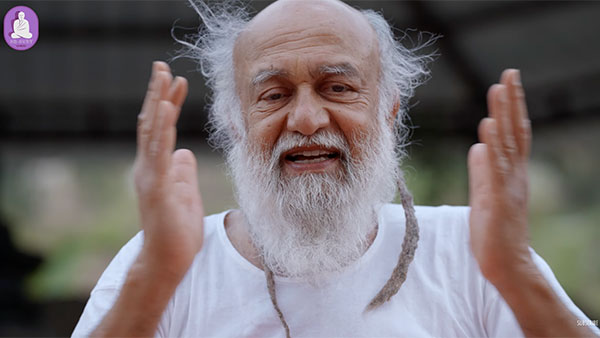
Baba shares how the aim and purpose of spirituality is to know yourself as the Consciousness of Existence.